
This sponsored post shares my personal experience and is not intended as medical advice. Every child is different. Talk with your pediatrician or other qualified healthcare provider about when and how to introduce peanut-containing foods, particularly if your child has eczema, an egg allergy or other allergy risk factors.
Parents are introducing peanuts earlier than they used to because guidance around food allergy prevention has changed significantly in recent years. Instead of routinely delaying peanut exposure, many pediatric and allergy experts now recommend introducing peanut-containing foods during infancy for many babies, since early and appropriate exposure may help reduce the risk of developing a peanut allergy. The American Pediatrics Association refers to the LEAP test and its of Bamba when speaking about peanut introduction. The landmark Learning Early About Peanut Allergy (LEAP) study looked at early peanut consumption in infants who were considered at high risk for peanut allergy
For parents, that shift can feel surprising, especially if they remember being told to avoid common allergens during a baby’s first year. Understanding why the recommendations changed, when peanut introduction may be appropriate, and how to do it safely can make the process feel much less overwhelming.
Peanut Advice Has Changed Since Many of Us Were Kids
Peanut advice has changed a lot since I was a kid. I don’t think my mom even considered the question of when to introduce peanuts to us when we were babies in the 1980s. I mean we slept in the back of the minivan on the floor in sleeping bags on road trips — the ’80s were a wild time. Who knows, when I had my first taste of peanuts, back then the PB&J was a staple food in every house. (It’s still one of my comfort foods!) I say all of that with a bit of tongue and cheek, but things were just different. My mom was up on whatever the current parenting advice was, it’s just that society didn’t know what it didn’t know. When you know better, you do better, and with each passing decade we know more about peanut allergies than we did before and advice changes to reflect that new knowledge.

What Current Pediatric Guidance Says
Today, the current American Academy of Pediatrics guidelines support age-appropriate early introduction of infant-safe peanut-containing foods, with recommendations differing based on allergy risk factors. One of the interesting things about having kids with a large age gap like we do is that parenting recommendations changed dramatically in the nine years between my oldest and my youngest. When my oldest was born, the recommendation was to wait until age three to introduce peanuts, by the time my youngest came along the recommendation was four to six months old. Forget generational differences, the recommendations for peanuts changed drastically enough to completely change how I introduced peanuts to my oldest and my youngest child.

What I learned is that newer studies suggest that a body needs to be introduced to allergens early in order to understand that they are not a threat. By avoiding peanuts longer, the LEAP study showed, the body didn’t learn early on that peanuts were ok. Therefore, delaying the introduction can actually increase the chances of the thing old recommendations were trying to avoid. Oh, the irony.
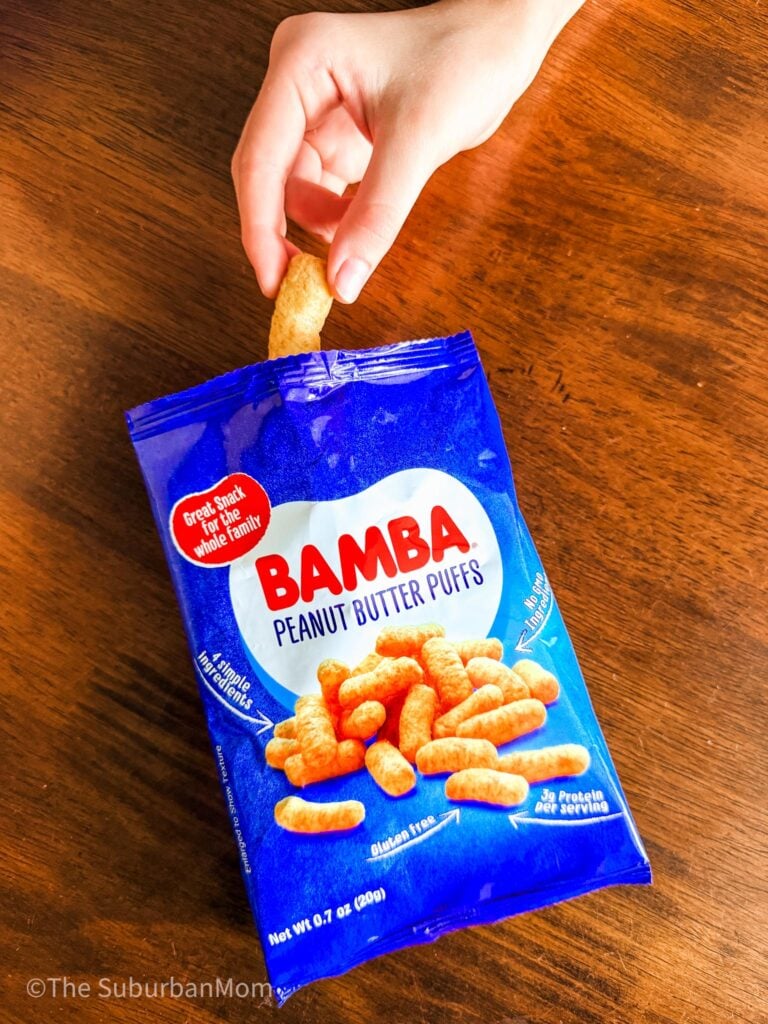
I remember my mom marveling at how different raising a baby was when my oldest was born vs when I was a baby, nine years later I marveled at how much parenting advice changed from baby number one to number three. Peanut-containing snacks like Bamba Peanut Butter Puffs make feeding baby peanuts easy and yummy.
While my family has a history of skin allergies and environmental triggers, I am very thankful that my kids don’t have any food allergies. But we didn’t know that when they were babies and it was defiantly something I worried about, especially with my own history of eczema. Today the National Institute of Allergy and Infectious Diseases (NIAID) Peanut Allergy Prevention Guidance provides different recommendations for infants with severe eczema or egg allergy, mild to moderate eczema, and infants without those risk factors.
What Was the LEAP Study?
The Learning Early About Peanut Allergy (LEAP) study, published in 2015, studied early peanut consumption among infants at high risk for peanut allergy. That study drastically changed the guidelines for peanut introduction before my youngest was born. So, while we waited for the recommended three years to introduce my oldest to peanuts, peanuts were among the first foods we introduced our youngest daughter to.
As a family who loves peanuts, introducing peanuts early to my youngest helped make life easier since we already had peanut-eating kids ages 10 and five by then. I liked not having to worry about keeping the baby away from peanuts, while knowing I was following the current guidelines. So, we introduced peanuts as one of her first foods, as recommended. And when we discovered Bamba peanut snacks, it was a natural fit for our family snacking.
Why Bamba Was Part of the LEAP Research
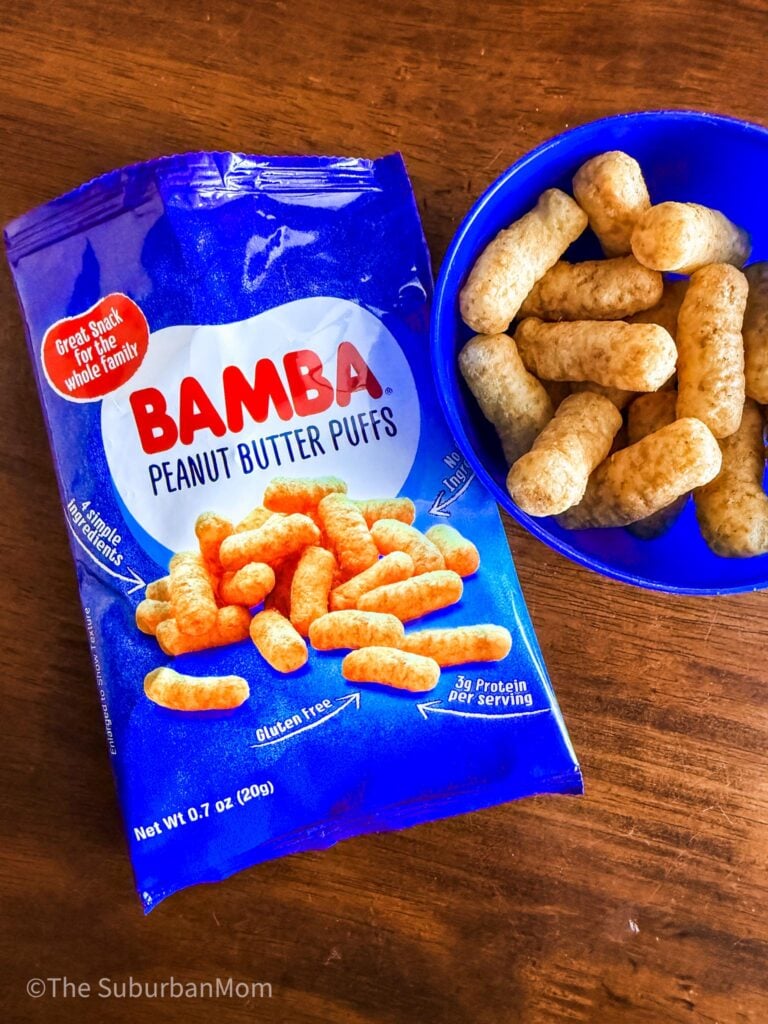
Bamba peanut puffs were one of the peanut-containing foods used in the LEAP study of 600 children over a four-year study because they are an convenient way to introduce babies to peanuts. No one is handing an actual peanut over to baby, that would be a choking hazard, and peanut butter is so sticky I’d worry about babies eating that too. Bamba puffs, on the other hand, dissolve easily and are a great way to introduce peanuts. You don’t need teeth to enjoy Bambas!
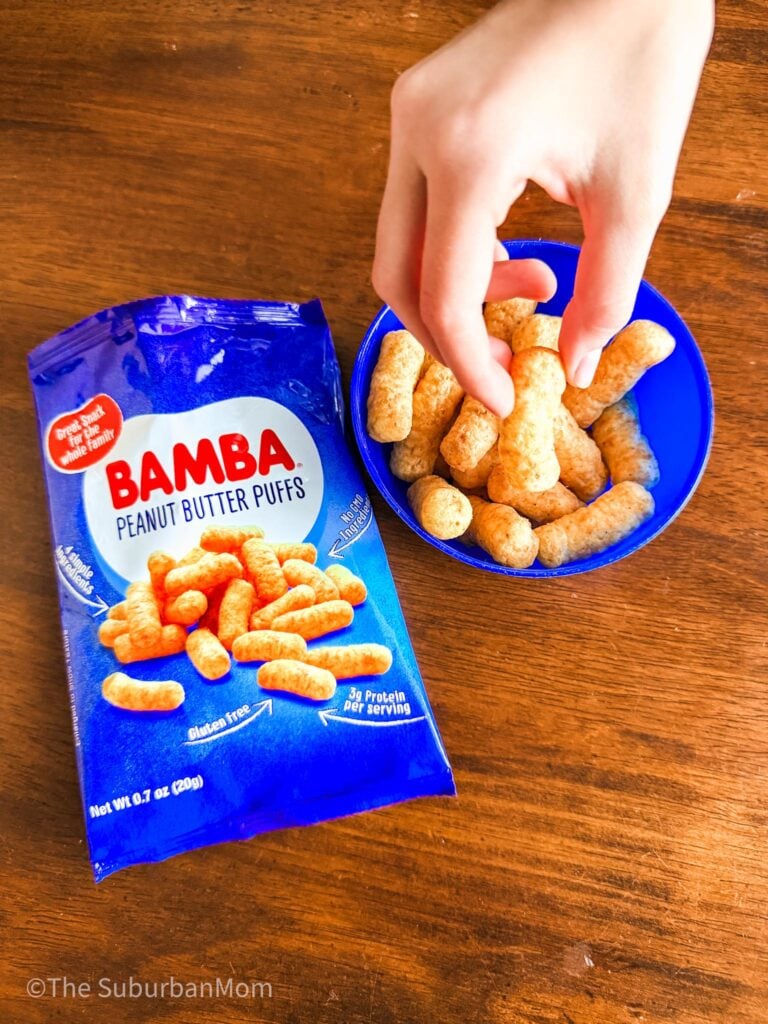
When our kids were little puff snacks were a staple in the house. In fact, by the time baby number three came along we were going through a LOT of puff snacks because older girls still loved to eat puffs. I don’t remember when we discovered Bamba, but I remember them being an instant hit with the baby, big sisters and dad. I like them too, but the four of them went through bags of Bamba snacks. And since it’s not just about introducing peanuts, but maintaining peanut-containing foods our family’s routine, I didn’t mind them all being hooked on Bamaba.
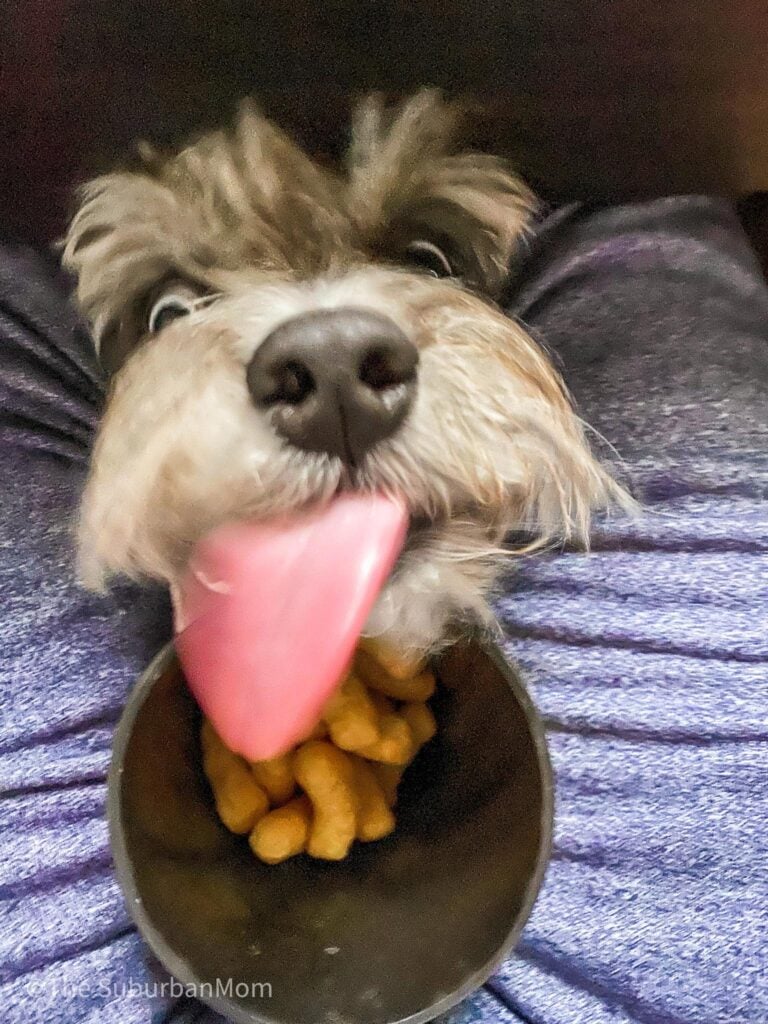
I cannot talk about our family liking Bamba’s without sharing this picture of the sneakiest member of our family. Our dog Scout is a peanut butter fiend and also thinks Bamba’s are a delicious peanut butter snack.
Why Talking With Your Pediatrician Still Matters When It Comes to Peanut Allergies
Putting aside all research and experiences of other parents, it is important to talk to your pediatrician about your child. Every kiddo is different, and your pediatrician should weigh in on your kiddo’s risk factors. If you are worried about introducing allergens use the LEAP study and the current recommendations as a place to start the conversation with your pediatrician. And when your pediatrician gives you the green light to introduce peanuts, Bamba is an excellent place to start. You might find the whole family enjoys snacking on them.
Bamba Peanut Butter Puffs are made with four simple ingredients peanut butter, corn grits, sunflower oil and salt. There are no artificial colors, flavors or preservatives and no added sugars. They are available at Target, Walmart, Meijer, Kroger, Shoprite and Wegmans.
Frequently Asked Questions About Early Peanut Introduction
Why are parents introducing peanuts earlier than they used to?
Parents are introducing peanuts earlier because pediatric guidance has changed. Instead of routinely delaying peanut exposure, current recommendations support age-appropriate introduction of infant-safe peanut-containing foods for many babies.
What does current pediatric guidance say about introducing peanuts to babies?
Current American Academy of Pediatrics guidance supports age-appropriate early introduction of peanut-containing foods, with recommendations varying based on a baby’s allergy risk factors.
What was the LEAP study?
The Learning Early About Peanut Allergy, or LEAP, study was published in 2015 and looked at early peanut consumption in infants considered at high risk for peanut allergy. The findings helped influence changes in peanut introduction recommendations.
Was Bamba used in the LEAP study?
Yes. Bamba peanut puffs were one of the peanut-containing foods used in the LEAP study.
Do peanut introduction recommendations differ for babies with eczema or egg allergy?
Yes. Guidance differs depending on a baby’s individual risk factors. NIAID guidance provides different recommendations for infants with severe eczema or egg allergy, mild to moderate eczema, and infants without those risk factors.
Should I talk to my pediatrician before introducing peanuts?
Yes. Every child is different, and your pediatrician can help you consider your baby’s individual risk factors and decide when and how peanut-containing foods should be introduced.
What ingredients are in Bamba Peanut Butter Puffs?
Bamba Peanut Butter Puffs are made with peanut butter, corn grits, sunflower oil, and salt. They also contain no artificial colors, flavors, preservatives, or added sugars.
Where can I buy Bamba Peanut Butter Puffs?
You can buy Bamba Peanut Butter Puffs at Target, Walmart, Meijer, Kroger, ShopRite, and Wegmans.
Can Bamba be part of a family’s regular snack routine?
Yes, Bamba Peanut Butter Puffs are a great family snack routine. Bamba became a regular snack for the baby, older siblings, and parents after peanut-containing foods were introduced.